
TL;DR
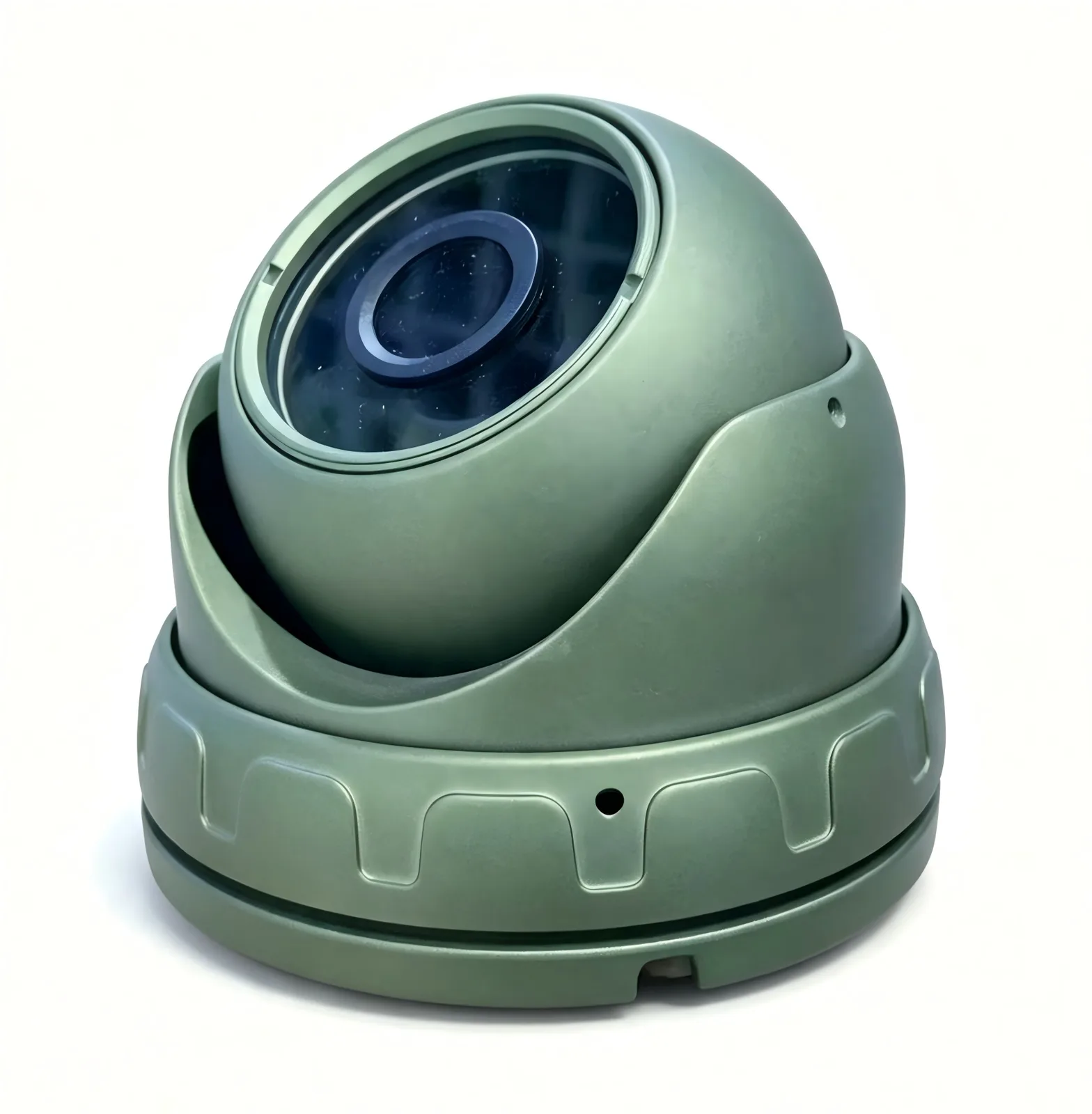
Choose IP network cameras (IPC) when you want high-resolution video over the network and remote monitoring through an NVR or platform, rather than coax to a local display. YUNTOR IP cameras deliver 2560×1440 (2K) with IR night vision and standard ONVIF. Pick IPC when your fleet runs a network recorder; keep AHD when cameras plug into existing analog displays.
Fleet video comes in two signal standards: analog over coax (AHD/CVBS) and digital over the network (IP). Most commercial vehicles started analog for simplicity, but fleets moving to remote monitoring and a central recorder increasingly choose IP network cameras. This guide covers when an IPC upgrade is worth it.
IP vs analog: the core difference
An AHD camera runs HD video over coax to a local display or recorder on the vehicle. Simple, low-latency, no network setup — but each camera is wired, and viewing is largely local.
An IP camera puts each camera on the vehicle network. Video streams to an NVR or platform, so a manager views and records remotely, and resolution can go higher per camera.
What IP adds for a fleet
Remote access. Because IP video lands on the network, a manager can view live or archived feeds from the office rather than on-cab display. This is the main driver for the IPC upgrade.
Higher resolution. IP scales to 2K and beyond. The YUNTOR X-IPC001 and X-IPC002 deliver 2560×1440 — a step above AHD’s typical 1080p/720p — with a 4MP-class sensor and H.265/H.264 encoding for efficient bandwidth.
Interoperability. The X-IPC range supports standard ONVIF, so it connects to mainstream NVRs and management platforms without vendor lock-in.
Night coverage. Both models carry 24 IR LEDs with automatic day/night switching, keeping a clear low-light view through the night.
When IP is the right choice
Choose IPC when you:
- Already run, or want, an NVR or fleet management platform for remote viewing.
- Need higher resolution per camera than analog delivers.
- Want centralized archiving and remote access across a dispersed fleet.
- Have a network path (wired or vehicle LAN) to the cameras.
Keep AHD when your cameras plug into existing analog displays and recorders over coax, and you do not need remote network viewing. Mixing the two requires video encoders at the transition point.
Quick reference: YUNTOR IP cameras
| Model | Resolution | Output | Night vision | Feature |
|---|---|---|---|---|
| X-IPC001 | 2560×1440 | IP / ONVIF | 24 IR LEDs | Dome, H.265/H.264 |
| X-IPC002 | 2560×1440 | IP / ONVIF | 24 IR LEDs | Metal square housing, IP-rated |
Deciding for your routes
- Confirm your recorder/platform accepts IP + ONVIF and has channel capacity.
- Weigh remote viewing against the cost and data of a network layer.
- Match resolution and night IR range to your monitoring needs.
YUNTOR builds both AHD analog and IP network cameras on self-developed boards with low-MOQ OEM/ODM. The X-IPC001 and X-IPC002 network cameras feed an NVR or platform directly, and a hybrid install pairs them with AHD reversing cameras and a fleet management solution for a single oversight layer. Contact our engineers to plan an IP or hybrid fleet video fit around the recorder you run.
Looking for IP network cameras?
IP network cameras (IPC) stream high-resolution video over your fleet network, feeding recorders, monitors and remote platforms. YUNTOR IP cameras deliver 2560×1440 resolution with IR night vision in a compact vehicle-grade housing.