
TL;DR
A human detection camera uses on-device AI to distinguish people from vehicles and environmental movement, then flags or records when a person appears, unlike simple motion detection. On fleet vehicles it supports worksite and cab monitoring, and pairs with infrared night vision to keep working after dark.
Many cameras have detected “motion”; few correctly identify people. A human detection camera moves past motion triggers to on-device AI that tells a person from a moving branch or a passing vehicle — and that is what makes monitoring alerts worth acting on.
This guide explains what the feature actually does and the specs that make it reliable.
Motion detection vs human detection
- Motion detection fires on any change in the frame. It cannot tell a person from a shadow, animal or rustling tree — so it produces false alarms.
- Human detection runs an AI model on the video to classify whether an object is a person, suppressing false triggers from non-human movement.
The practical difference: a human-detection alert means “a person is there”, not “something moved”.
How on-device detection works
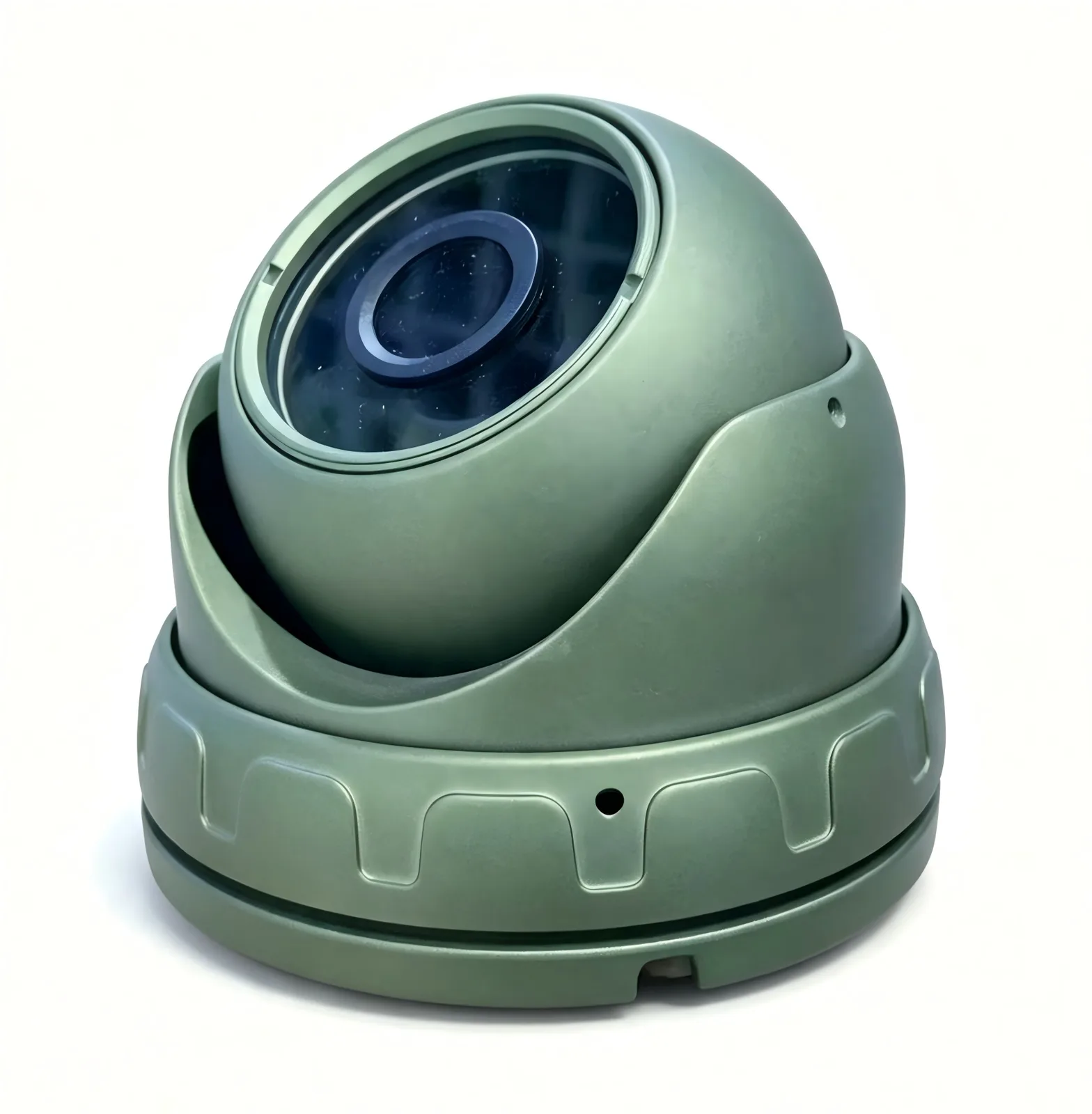
On a YUNTOR IP camera, an on-board 0.5T AI tile classifies objects in each frame for person detection and framing. Because the classification runs on the camera, it happens without a central server and without sending every frame off-vehicle. The camera flags a person and can trigger recording or an alert.
What makes human detection reliable
Three specs decide whether the feature is actually usable:
- Imaging must stay clear for the AI. Detection is only as good as the video. IR LEDs with automatic day/night switching keep a usable low-light frame for the model to work on. X-IPC001 and X-IPC002 carry 24 IR LEDs.
- Detection scope must match the use. Is the camera watching a worksite, the near-side of a bus, or a cab? Position and lens must frame the area where a person can appear.
- The alert path must reach someone. An AI “person detected” event is only useful if it reaches the right person or is logged. Confirm how the camera pushes events to a recorder, platform or operator.
Where fleets use it
- Worksite and loading areas — personnel-safety monitoring where a person entering a hazard zone must trigger a response.
- Vehicle near-side / pedestrian awareness — flagging people near the vehicle, complementing BSD.
- Cab / interior monitoring — a person-presence trigger, with the camera’s IR keeping a night view.
Quick reference
| Spec | What to check | YUNTOR example |
|---|---|---|
| On-device AI | Classification on camera, not central | 0.5T AI tile (X-IPC001/002) |
| Resolution | Enough detail to classify | 2560×1440 |
| Night imaging | IR keeps the frame usable for AI | 24 IR LEDs |
| Output | Network to NVR/platform | IP, ONVIF |
Deciding
- Confirm the camera’s on-device detection and resolution for your use.
- Match position and lens to the area a person can appear.
- Verify night coverage and the alert path to whoever acts on it.
YUNTOR builds human-detection IP cameras and AI fleet terminals on self-developed boards with low-MOQ OEM/ODM options. The X-IPC001 and X-IPC002 network cameras carry the on-device detection, and the alert path typically runs through a fleet management solution or a construction machinery safety setup. Contact our engineers to scope a person-detection setup for your site or fleet.
Looking for IP network cameras?
IP network cameras (IPC) stream high-resolution video over your fleet network, feeding recorders, monitors and remote platforms. YUNTOR IP cameras deliver 2560×1440 resolution with IR night vision in a compact vehicle-grade housing.