
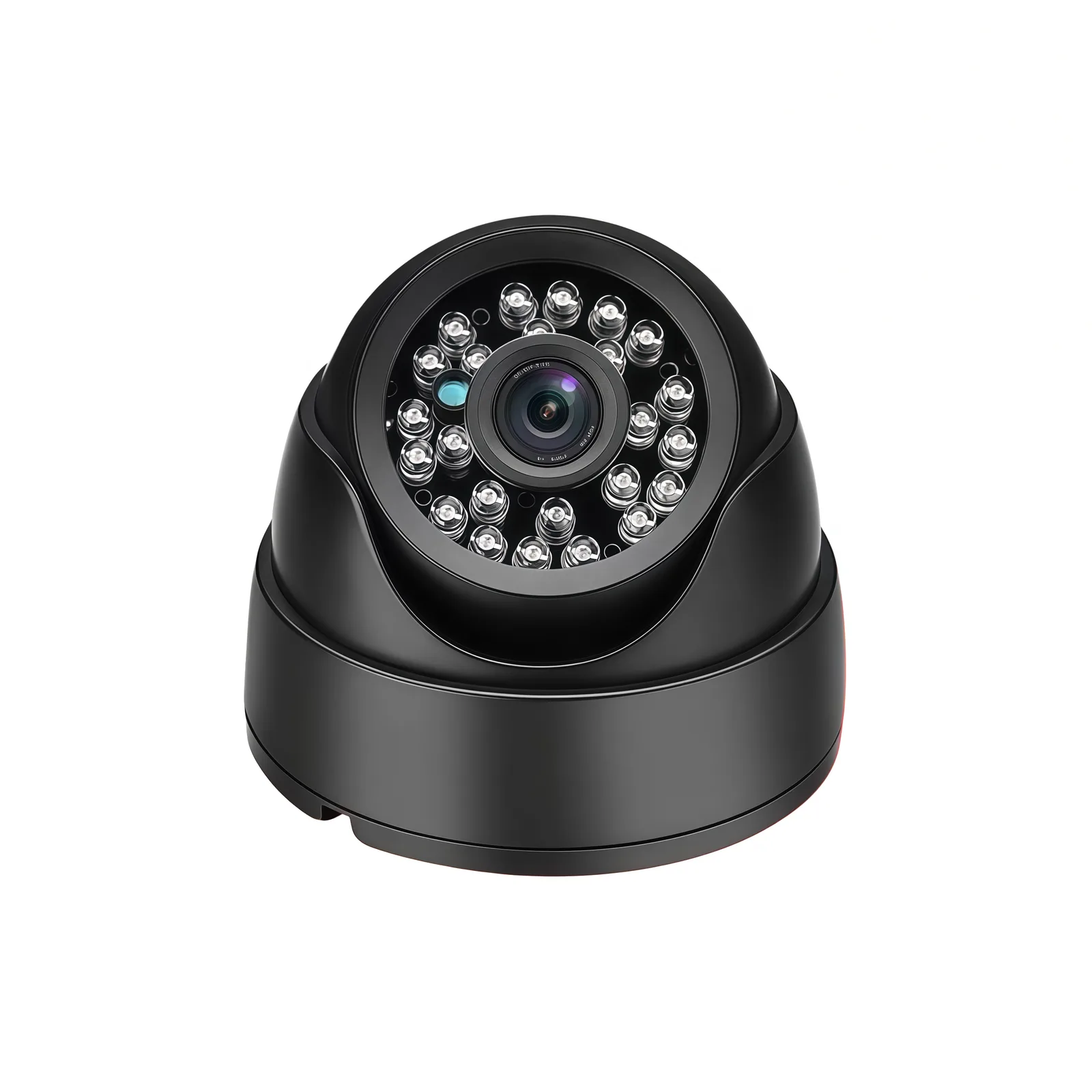
TL;DR
Pick a reversing camera output by what your display or recorder accepts. AHD runs HD video over coax to existing analog monitors and is the common choice. CVBS suits only legacy displays. USB cameras plug into a monitor or recorder with a USB/UVC input, and IP cameras stream to an NVR over the network. Match the input you already have.
The “HD vs analog” question for a reversing camera is really an input-matching question: your cab display or recorder accepts one type, and the camera must match it. Choosing by output first avoids buying a camera that will not connect without an extra converter.
The four output types
- AHD — HD video over coax. Upgrades to 720p/1080p on existing analog infrastructure. Common commercial standard (X069, X201).
- CVBS — older analog standard. Low resolution; only where a legacy display lacks HD input.
- USB / UVC — plugs into a monitor or recorder with a USB input. Often plug-and-play (X012, X070).
- IP — streams over the network to an NVR or platform via ONVIF (X-IPC001, X-IPC002).
How to choose by your setup
If you have an analog AHD monitor/recorder → choose AHD. It runs HD over the coax you already have. YUNTOR AHD reversing cameras include X069 and X201.
If your display has a USB reversing input → choose USB/UVC. It plugs straight in. X012 and X070 are 1920×1080 USB cameras with built-in IR for night coverage.
If you run an NVR or fleet platform → choose IP for network recording and remote viewing. Both X-IPC models deliver 2560×1440 with IR.
If you are on legacy CVBS → you may need an AHD-to-CVBS converter or an upgrade, since CVBS carries low resolution.
Quick comparison
| Output | Video over | Best when | YUNTOR model |
|---|---|---|---|
| AHD | Coax | Existing analog monitor | X069, X201 |
| USB | USB/UVC | Display has USB input | X012, X070 |
| IP | Network | NVR / fleet platform | X-IPC001, X-IPC002 |
| CVBS | Coax (low-res) | Legacy display only | — (upgrade advised) |
Night vision across outputs
Night coverage is independent of output but still a key spec: whichever output you pick, confirm the camera has IR for darkness. In the YUNTOR reversing range, X069 and X201 (AHD) and the USB models X012 and X070 all carry IR night vision; confirm the illumination range suits the distance you reverse.
Deciding
- Identify your display/recorder input — look for the socket (coax, USB, network).
- Match the camera output to that input.
- Confirm IR/night coverage for your reversing hours.
Because YUNTOR builds AHD, USB and IP reversing cameras on self-developed boards, you can standardize on one vendor across mixed displays at low MOQ — including the AHD X069 and X201, USB X012 and X070, and the IP network cameras for NVR-based fleets. Send your cab monitor input to our engineers to pick the right output.
Looking for infrared & reversing cameras?
Infrared and reversing cameras give a driver a clear view behind the vehicle day and night, from tight reversing into loading docks to low-light maneuvering. YUNTOR builds them with IR night vision, metal waterproof housings and USB or AHD output to match your monitor.