
TL;DR
A MIPI camera module is a small camera that transmits image data to a processor over the MIPI CSI-2 interface, a high-speed, low-power serial standard defined by the MIPI Alliance. It pairs an image sensor with the CSI-2 output so engineers can integrate a camera directly into embedded devices such as vehicle terminals, ADAS units and DMS cameras.
When a camera has to live inside a device — an AI terminal, an ADAS unit, a driver-monitoring camera — the way it connects to the processor matters as much as the sensor itself. That connection is usually MIPI.
The interface is the point
Unlike a finished USB camera you plug in, a MIPI camera module is designed to be built into a product. It exposes the sensor’s output over the MIPI CSI-2 interface (Camera Serial Interface). MIPI stands for Mobile Industry Processor Interface — the alliance that defined the CSI-2 standard — and a MIPI camera module uses this interface to move image data from the sensor to the host processor at high speed with low power draw.
CSI-2 sends image data over one or more high-speed serial “lanes” directly to the host processor. That design gives it three properties embedded designers care about:
- High bandwidth — enough lanes to carry high-resolution, high-frame-rate video.
- Low power — critical for always-on in-vehicle and battery-sensitive devices.
- Low latency — the processor receives frames with minimal delay, which matters for real-time safety functions.
What’s inside the module
- An image sensor that converts light to digital pixels.
- A lens matched to the required field of view and focus.
- CSI-2 output wiring the sensor to the host over MIPI lanes.
- Sometimes a small flex cable and connector sized for tight enclosures.
Because the module is meant to be integrated, sensor choice and lens choice are design decisions, not fixed features — they are selected for the target application.
MIPI vs USB, in one line each
- MIPI CSI-2: lowest latency and power, connects straight to the processor, best for products where the camera is built in.
- USB: universal and plug-and-play, but higher overhead and latency, best for external accessories.
For a vehicle terminal or an ADAS/DMS device, MIPI is almost always the right choice.
MIPI CSI-2 vs USB at a glance
| Attribute | MIPI CSI-2 | USB 2.0 |
|---|---|---|
| Typical latency | Under 20 ms | 50 to 120 ms |
| Interface lanes | 1 to 4 data lanes | 1 differential pair |
| Max cable length | About 20 to 30 cm | Up to 3 to 5 m |
| Power draw | Lower | Higher |
| Best for | Built-in integration | External accessories |
These are representative interface figures; exact numbers depend on the sensor, SoC and resolution chosen for a given design.
Where MIPI modules show up in vehicles
- ADAS units that need low-latency forward video for collision and lane warnings.
- DMS cameras watching the driver, where frame timing affects fatigue detection.
- AI terminals doing on-device inference on a live camera feed.
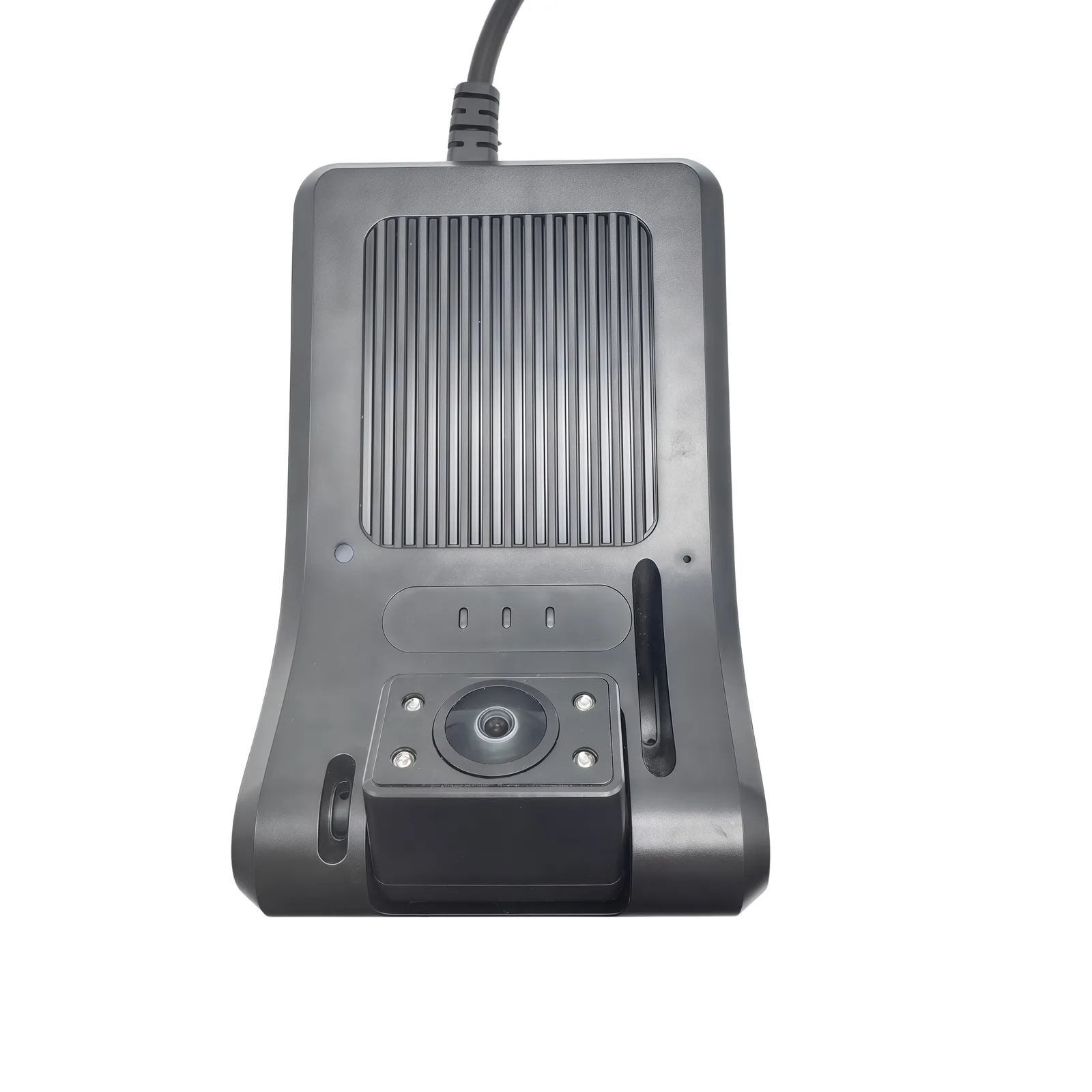
In YUNTOR’s product line, MIPI camera modules are used in custom terminal integrations, while the off-the-shelf X066 AI DMS camera (fatigue and distraction detection with infrared night vision for low-light cabs) and the X225 ADAS camera (forward-collision FCWS and lane-departure LDWS warnings) output over AHD to a recorder or edge terminal. The same integration approach carries across YUNTOR’s self-developed 4G AI terminals, where built-in sensors sit alongside AHD inputs for added external cameras.
YUNTOR develops its own boards and supplies MIPI camera modules for these integrations, selecting sensor and lens to the application and offering low-MOQ OEM/ODM — so a custom terminal gets exactly the module it needs rather than a compromise.
YUNTOR modules and terminals at a glance
| Model | Type | Integration |
|---|---|---|
| X066, X065 | DMS driver fatigue warning cameras | AHD output, infrared night vision |
| X225 | ADAS active safety camera | AHD forward sensor, FCWS/LDWS |
| X124, X125 | Mini DMS series | Compact cab mounting |
| ITH-C5 | Waterproof AI terminal | Edge computing plus 4G fleet management |
| X400 | 4G dual-channel dashcam | Two channels, live GPS tracking |
All of these run on YUNTOR’s self-developed boards with low-MOQ OEM/ODM customization. MIPI modules are available for custom terminal builds, while the off-the-shelf camera range outputs over AHD for direct connection to existing recorders and displays.
The interface trade-offs from the table above carry into product selection: a built-in MIPI module is chosen for the low latency of MIPI CSI-2 (typically under 20 ms over 1 to 4 data lanes), while an external accessory can tolerate the 50 to 120 ms and 3 to 5 m cable reach of USB. YUNTOR’s off-the-shelf cameras such as the X066 and X225 use AHD output to connect to standard in-cab recorders.
Looking for AI terminals & MDVR?
YUNTOR AI terminals and MDVR recorders bring edge computing and 4G fleet management to commercial vehicles — live tracking, dual-channel recording and camera-module integration on self-developed hardware.