
TL;DR
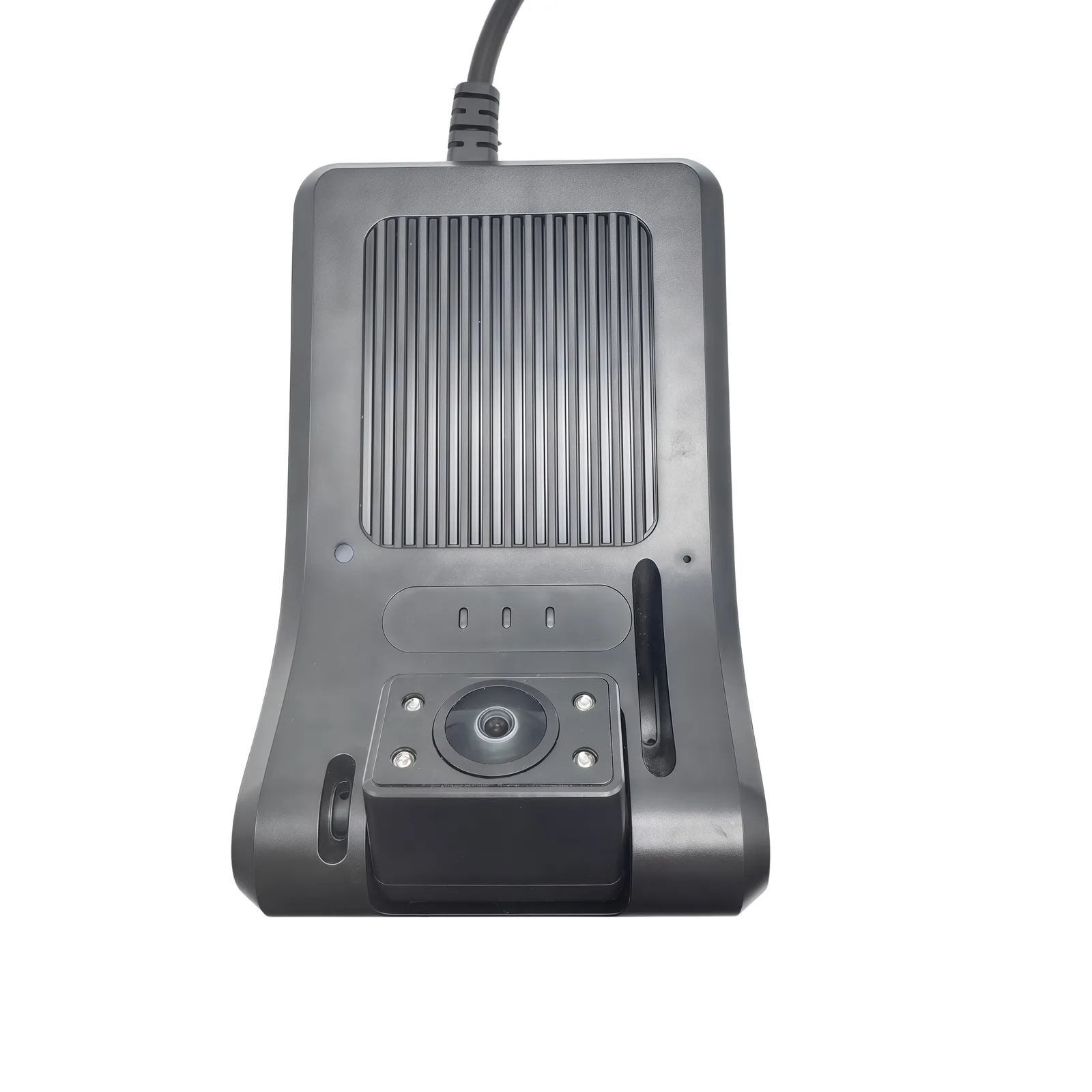
A dual-channel dash cam is a vehicle camera that records two video streams simultaneously, typically the road ahead through a front lens and the cabin interior or the road behind through a second lens or camera, giving a synchronized front-and-rear record from a single device.
If a single-lens dash cam only tells half the story, a dual-channel dash cam tells both halves at once. It is the standard choice for anyone who needs to know what happened in front of the vehicle and inside or behind it.
Two synchronized views
The defining feature is in the name: two channels, meaning two video streams recorded at the same time from one device. The usual pairings are:
- Front + cabin — the road ahead plus the driver and passenger area. Favoured by taxis, rideshare and any operation where interior evidence matters.
- Front + rear — the road ahead plus the road behind, for rear-end collision evidence and reversing.
Both streams share a clock and are stored together, so the front and second views can be replayed in sync — essential when reconstructing an incident.
How the recording works
- The front lens captures the road ahead; a second lens or attached camera captures the cabin or rear.
- Both feeds are encoded and written to storage (an SD card, or onboard storage on fleet terminals) with matching timestamps and, on connected models, GPS coordinates.
- Event triggers — hard braking, impact, or a manual button — flag and protect the relevant clips so they are not overwritten by loop recording.
Single vs dual vs multi-channel
- Single-channel: one view, lowest cost, forward evidence only.
- Dual-channel: two views, the practical minimum for driver protection and interior evidence.
- Multi-channel (MDVR): four or more views for buses, trucks and machinery that need all-round coverage.
Pick the channel count from the number of angles you actually need to defend, not the maximum available.
| Type | Channels | Typical storage | Best for |
|---|---|---|---|
| Single-channel | 1 | 32–128 GB SD | Basic forward evidence |
| Dual-channel | 2 | 64–256 GB SD | Taxi, rideshare, light fleet |
| Multi-channel MDVR | 4–8 | 1–4 TB HDD/SSD | Bus, truck, machinery |
Connected models add 4G upload and GPS, streaming both channels to a fleet platform in near real time.
Why fleets choose dual-channel
- Complete evidence of both the road event and the cabin, cutting disputed-liability claims.
- Driver coaching from real footage of behaviour behind the wheel.
- Insurance and compliance support with timestamped, synchronized records.
- Connected operation when 4G, GPS and cloud upload push footage to a fleet platform live.
YUNTOR builds 4G dual-channel and multi-channel terminals on self-developed boards, so recording, connectivity and AI functions are integrated in one device — with low-MOQ OEM/ODM customization for operators who need a specific channel and feature mix. When driver monitoring is part of the package, the dual-channel setup pairs with a DMS camera such as the X066 so the road and the driver are both covered on one install, and the whole configuration is typically specified as part of a fleet management solution.
A concrete example is the X400 4G dual-channel dashcam: it records two camera feeds while streaming live GPS location and video over 4G to a fleet-management platform, giving logistics and transportation fleets real-time visibility plus recorded evidence. For wider coverage, YUNTOR’s 4G AI terminals and MDVR recorders expand to four or more AHD channels with onboard storage for buses, trucks and machinery.
YUNTOR recording models at a glance
| Model | Type | What it does |
|---|---|---|
| X400 | 4G dual-channel dashcam | Two channels, live GPS tracking & remote management |
| ITH-C5 | Waterproof AI terminal | Edge computing plus 4G fleet management, AHD input |
The X400 covers the classic two-channel case; the ITH-C5 adds edge computing and 4G to a multi-channel recording setup. Multi-channel AVM hosts and MDVR configurations are also available — contact our engineer for the channel mix your fleet needs.
In practice, matching the channel count to the vehicle matters more than the maximum: a 2-channel X400 dashcam covers a van or light truck, while a multi-channel MDVR or AVM host covers a bus or heavy truck. Storage scales with the count — 32–128 GB SD cards suit single-channel units, 64–256 GB suit dual-channel, and 1–4 TB HDD/SSD suits multi-channel recorders.
Looking for AI terminals & MDVR?
YUNTOR AI terminals and MDVR recorders bring edge computing and 4G fleet management to commercial vehicles — live tracking, dual-channel recording and camera-module integration on self-developed hardware.