
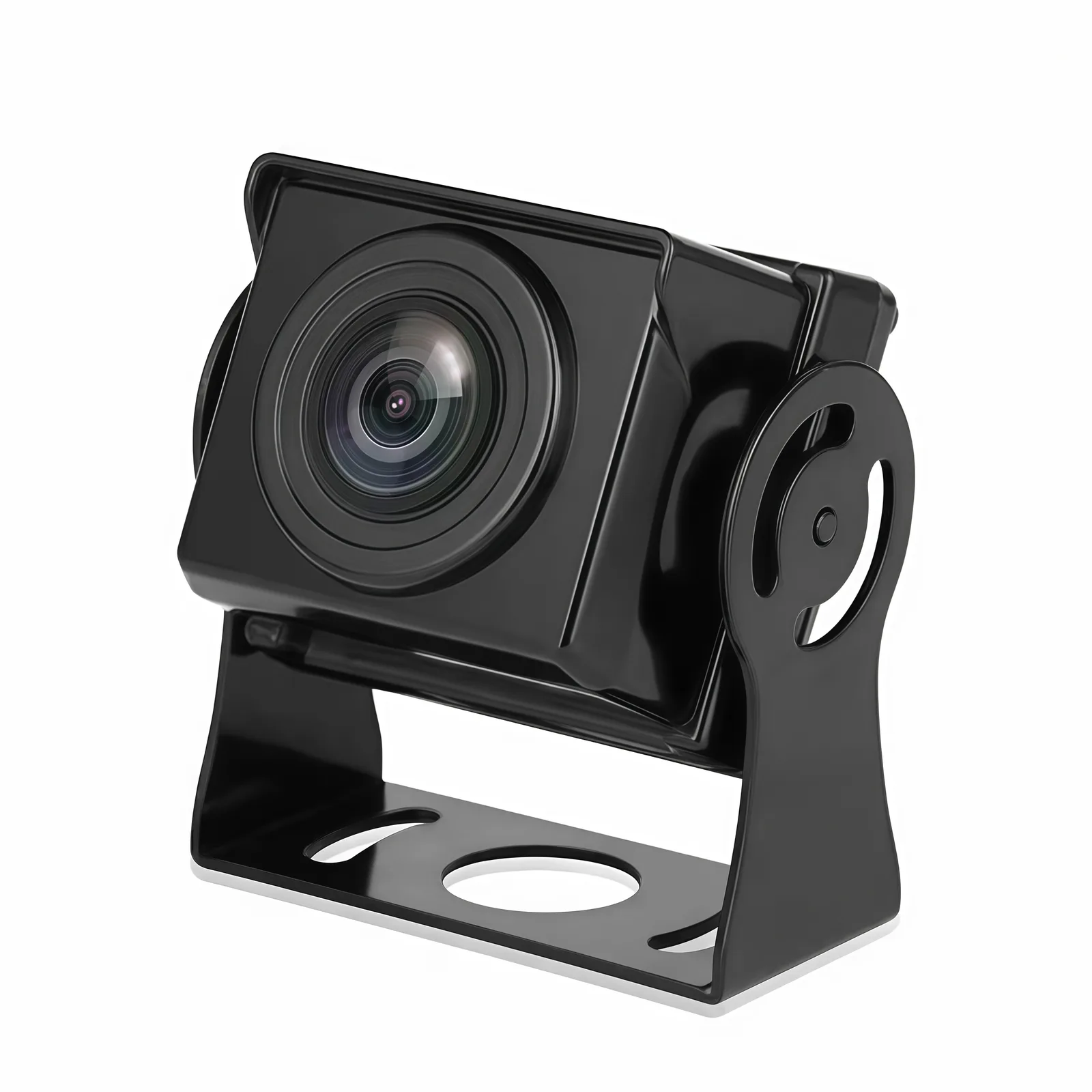
TL;DR
A BSD (blind-spot detection) camera for a fleet is chosen by matching four specs to your vehicles: resolution (1920×1080 is standard at 2.0M), video output (AHD suits existing analog monitors), night vision (IR LEDs or low-light sensor for darkness), and mounting and viewing angle for the side blind zone. Confirm the housing and connector against your cab.
A blind-spot detection (BSD) camera closes the gap the mirrors miss on the near side of a truck, bus or piece of construction machinery. The right choice is a match of four specs to your vehicles and routes — not a generic unit. This guide walks procurement through those decisions using the specs you can verify.
Why the camera choice matters
On commercial vehicles the near-side (kerb-side) blind zone is where cyclists and pedestrians travel and where the driver’s sightline is worst. A BSD camera that matches the vehicle’s blind-zone shape, output standard and lighting conditions is what turns a camera into an effective warning system. Choosing by spec avoids both blind-spot gaps and false alarm from a poorly placed lens.
The four specs that decide a BSD camera
1. Resolution
For a side blind-zone camera, 1920×1080 at 2.0M effective pixels is the working standard. It gives enough detail to classify a person versus a lamp post, which matters for the near-side-zone protection that blind-spot information systems target. In the YUNTOR range the BSD side cameras X037 and X084 both image at 1920×1080; the panoramic and general vehicle models X099 and X901 cover wider scenes in the same Full-HD class.
2. Video output
Pick the output that connects to the display or recorder you already run:
- AHD is the most common for BSD — it runs over the same coax as analog, upgrades the signal to HD, and needs no network configuration. X037, X084 and the dome/side cameras X149 and X108 all fit this.
- CVBS (older analog) is still used where a legacy monitor has no HD input.
- IP suits fleets whose recorder or platform is already IP/NVR, adding remote recording over the network — for example the X-IPC001 and X-IPC002 models.
If your fleet is mixed, AHD cameras connect to the widest spread of existing cab displays.
3. Night vision
If you run at night or through tunnels, the camera must see in low light:
- IR LEDs add active infrared illumination for darkness. In the YUNTOR range, X149, X108 and X901 carry IR night vision; the mini DMS X125 uses a low-light full-color sensor for night imaging without IR lamps.
- Low-light full-color keeps a color image in near-darkness, which can simplify the view for an operator.
Confirm the minimum-lux figure and choose IR or low-light imaging against your operating hours.
4. Mounting and viewing angle
The camera must see the actual blind zone for its mounting position:
- Side/A-pillar or side-mirror mount suits the near-side zone; a wide horizontal field captures the kerb-side length of the vehicle.
- Dome and side-mount models such as X149 and X108 give compact, adjustable coverage; X037 and X084 are dedicated BSD side cameras.
Match the field of view to the vehicle length and the mounting position you can actually use, and confirm the housing, connector and cable length against the cab.
Quick comparison: YUNTOR BSD & side-view cameras
| Model family | Resolution | Output | Night vision | Best mounted at |
|---|---|---|---|---|
| X037, X084 | 1920×1080 | AHD | — | Side blind zone |
| X149, X108 | 2.0M | AHD | IR | Side & compact dome |
| X099 | 1920×1080 | AHD | — | General view |
| X901 | 2.0M | AHD | IR | Panoramic / side view |
| X-IPC001, X-IPC002 | 2560×1440 (2K) | IP | IR LED | Network recording / human detection |
Procurement checklist
- Confirm your monitor/recorder output (AHD vs IP) before picking a camera.
- Match resolution to how much detail operators need — 1080p is the safe standard.
- Decide night operation and pick IR or low-light accordingly.
- Verify mounting position and viewing angle against the actual blind zone.
- Check the housing, connector and cable length for your cab layout and installation.
YUNTOR builds BSD and panoramic cameras and IP cameras on self-developed boards, so the cameras connect to existing displays and recorders rather than locking you into one vendor. The dedicated X037 and X084 BSD side cameras are the usual starting point, with infrared reversing cameras covering rear coverage, and the whole package often specified as part of a fleet management solution. To spec a BSD package against your vehicles, send your routes and mounting positions to our engineers.
Looking for panoramic & BSD cameras?
Panoramic and blind-spot detection (BSD) cameras reveal the zones a commercial vehicle driver cannot see, from the sides and rear to a full 360° bird’s-eye view. YUNTOR builds them on automotive-grade, wide-temperature housings with AHD output that drops into your existing monitor.