
TL;DR
Bus and school bus blind spot monitoring reduces risk around passengers, cyclists and pedestrians in the vehicle's near-side blind zone. A camera-based BSD system mounts side and rear cameras with a warning, often adding a DMS camera for the driver. It fits from the factory or as a retrofit on existing buses.
Bus and school bus blind-spot monitoring is about the near-side zone — the kerb-side area where cyclists ride and where school children wait. For a bus, that zone can hide a person entirely until the driver has already started to turn. A camera-based monitoring system closes that gap.
This guide covers what a bus or school-bus BSD system includes and how to fit it.
The near-side problem
The near-side (kerb-side) blind zone is the most dangerous on a bus or school bus: it is where people are at close proximity, and the driver’s sightline is worst. Camera-based blind-spot monitoring puts a view on that zone and warns the driver, addressing the highest street-level risk these vehicles carry.
What a bus BSD system includes
A typical camera-based system:
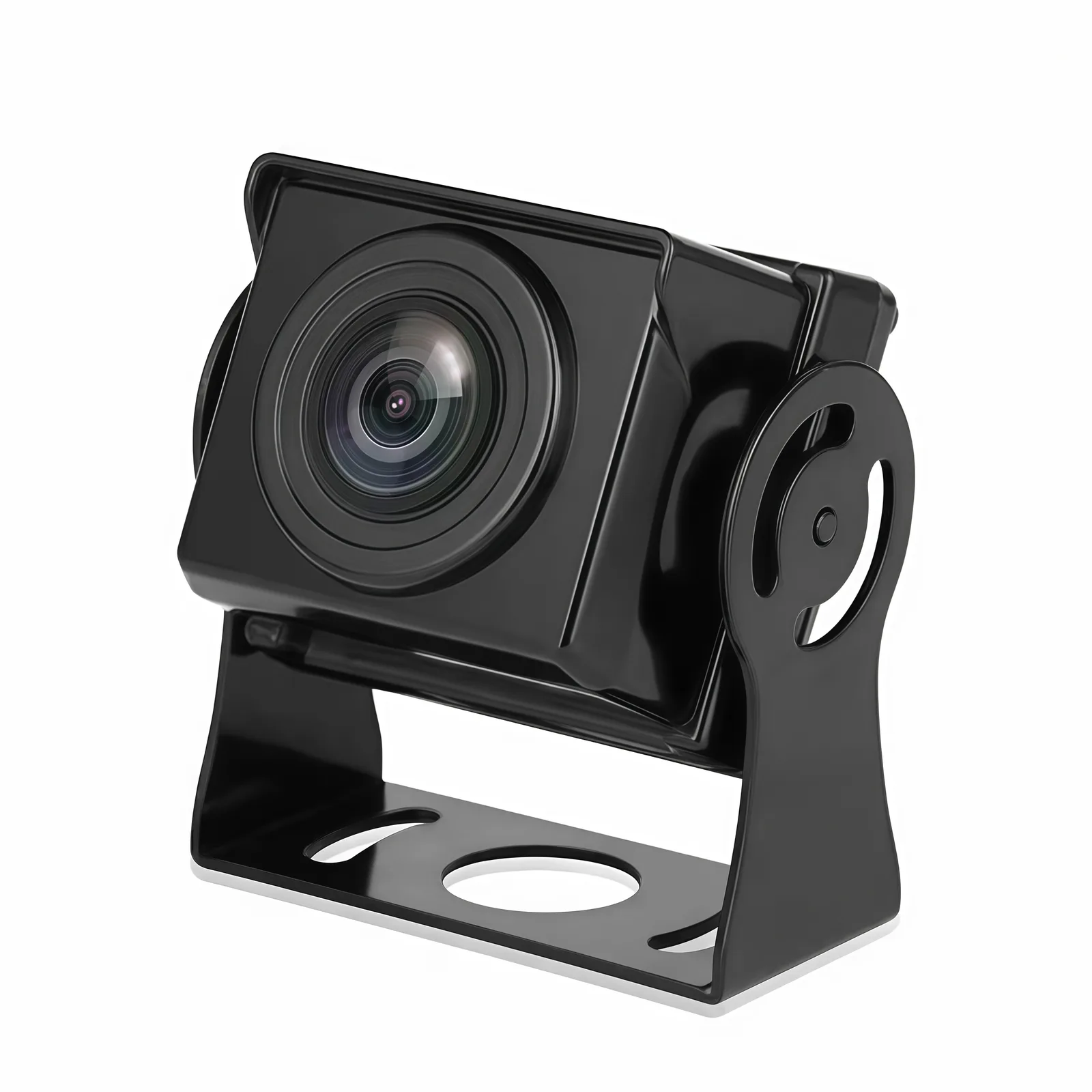
- Side and rear BSD cameras cover the near-side and rear blind zones. YUNTOR side cameras X037 and X084 image at 1920×1080 and fit side mounting.
- An in-cab display or existing recorder shows the feed to the driver.
- Optional interior/passenger coverage streams the cabin, and a DMS camera can add driver monitoring on the same wires.
For a school bus, early-morning pickups in the dark argue for night coverage as well.
Choosing and fitting
Camera output. Match the cameras to the display or recorder already in the bus. AHD cameras connect to existing analog monitors; IP cameras go to a network recorder or platform.
Blind-zone shape and mounting. Prioritize the near side. Dedicated BSD side cameras with a suitable field of view, tight to the kerb, are what count; wide or adjustable angles help on longer units.
Night coverage. School runs start before dawn; confirm IR or low-light imaging covers that window.
Retrofit vs factory. For an existing bus, retrofit side and rear cameras with an in-cab monitor is the practical route. Note the camera output must match the current display or recorder.
Blind-zone patterns across bus operations
The near-side risk is common to all buses, but the operating pattern shifts the priorities:
- Urban city buses stop frequently at kerbs where pedestrians and cyclists are dense, so near-side coverage and tight kerb viewing matter most; the driver also needs quick warning during frequent pull-aways.
- School buses combine the kerb-side risk with boarding children at stops and early-morning pickups in low light, which pushes night coverage up the list and, on many routes, a passenger-door view.
- Long-distance coaches spend more time on highways where lane-change blind zones at speed matter, so rear and side coverage plus driver monitoring carry more weight.
These are the kind of route-driven decisions a bus & school bus monitoring solution is configured around, pairing BSD blind-spot cameras such as the X037 and X084 with interior coverage and, where wanted, audible-visual alarms to warn people around the vehicle. For operations that also want a full perimeter view while manoeuvring, a 360° AVM system can be layered in alongside the BSD cameras.
Quick reference
| Need | Spec to check | Example |
|---|---|---|
| Near-side coverage | Dedicated BSD side camera | X037, X084 |
| Night pickups | IR / low-light imaging | — |
| Output to cab | AHD to display or IP to platform | AHD |
| Resolution | 1080p standard | 1920×1080 |
Deciding for your fleet
- Prioritize the near-side zone and the vehicle lengths you run.
- Match output to the display/recorder already fitted.
- Confirm night coverage for early-morning pickups.
- Choose retrofit or factory based on whether the fleet is existing stock.
YUNTOR builds BSD cameras, recorders and DMS units for bus and school-bus fit-outs on self-developed boards with low-MOQ OEM/ODM options. Contact our engineers to scope a blind-spot monitoring package for your bus fleet.
Looking for panoramic & BSD cameras?
Panoramic and blind-spot detection (BSD) cameras reveal the zones a commercial vehicle driver cannot see, from the sides and rear to a full 360° bird’s-eye view. YUNTOR builds them on automotive-grade, wide-temperature housings with AHD output that drops into your existing monitor.