
TL;DR
A 360° surround view system, also called an around view monitor (AVM), combines the feeds from four or more wide-angle cameras mounted on the front, rear and sides of a vehicle, then digitally stitches and corrects them into a single top-down bird's-eye image that shows the driver everything around the vehicle in real time.
Parking and manoeuvring a large vehicle means judging clearances the driver cannot actually see. A 360° surround view system removes the guesswork by giving one continuous image of everything around the vehicle from above.
How to picture the bird’s-eye view
The name “bird’s-eye view” is literal: the system presents the scene as if a camera were hovering directly overhead. No single camera can produce that image, so the system builds it from several.
- Capture. Four or more ultra-wide fisheye cameras cover the front, rear and both sides, with fields of view that overlap at the corners.
- Correct. Each fisheye image is heavily distorted at the edges, so the processor de-warps it back to a flat perspective.
- Stitch. The corrected images are merged along their overlaps and re-projected into a single top-down composite, blended so the seams are hard to see.
- Display. The stitched bird’s-eye view is shown next to a live directional camera, so the driver sees both the whole-vehicle overview and the direction of travel.
The main parts of an AVM system
- Wide-angle cameras with fisheye lenses, one per covered side.
- A processing unit that performs de-warping, stitching and blending in real time.
- A calibration profile matched to the specific vehicle’s dimensions and camera positions.
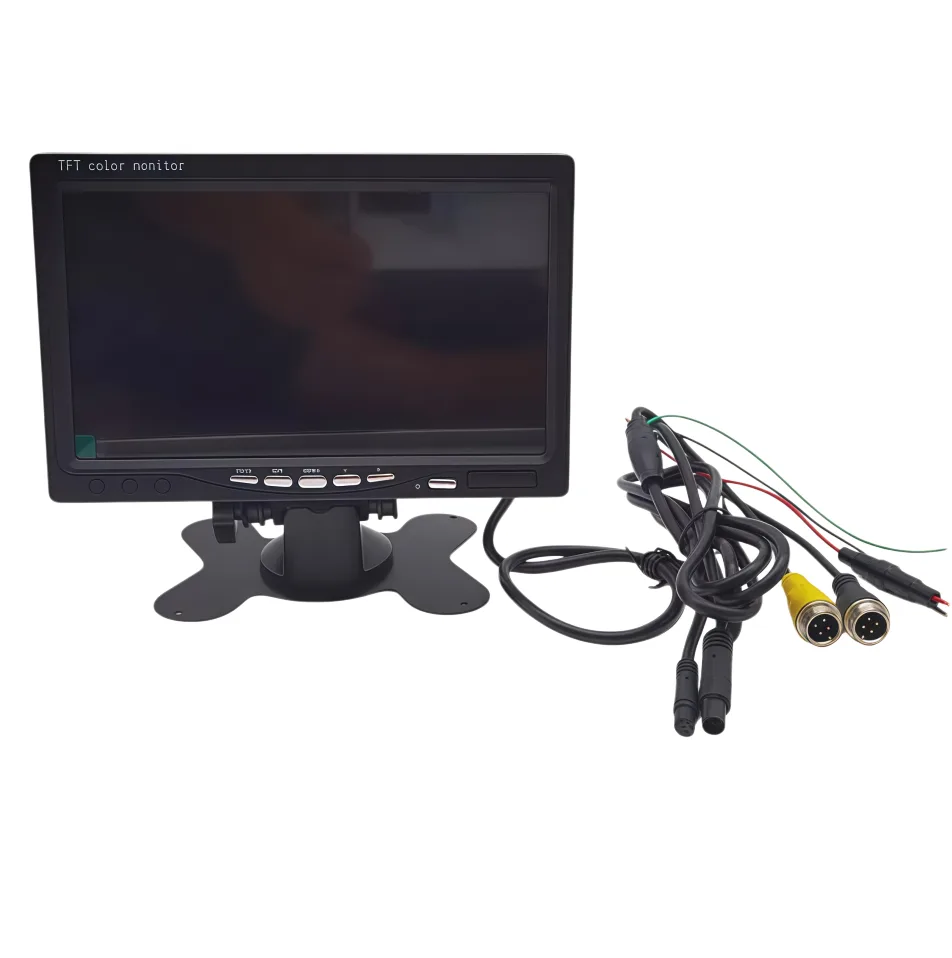
- A display in the cab, often shared with the reversing or BSD feed.
Calibration is what separates a usable AVM system from a distorted one. On a bus or excavator the camera geometry differs greatly from a car, so the stitching parameters must be tuned to that vehicle.
Benefits of 360 surround view
- Eliminated blind zones around the full perimeter, protecting pedestrians and property during low-speed manoeuvres.
- Easier tight-space handling for parking, loading bays and construction sites.
- Fewer minor collisions, which are frequent and costly on commercial fleets even when no one is hurt.
- A single glance replaces cross-checking several mirrors and cameras.
360 surround view vs a reversing camera
A reversing camera shows only the area directly behind the vehicle, and usually only while reversing. A 360 surround view system merges multiple cameras into a continuous bird’s-eye image around the entire vehicle and works while manoeuvring in any direction — forward, sideways or reversing — which is why it is preferred on large vehicles where the driver cannot see the sides at all.
Working at night
360 AVM systems work at night provided the cameras have good low-light sensitivity or infrared support. Image quality depends on sensor performance and available lighting, so for night-heavy operations you should specify cameras rated for low-lux conditions and confirm the stitching stays stable in mixed lighting.
Where AVM systems are used
Around view monitors started on passenger cars but are now common on buses, delivery trucks, forklifts and excavators, exactly the vehicles with the largest blind zones. For these vehicles the camera count rises and the calibration matters more. YUNTOR builds multi-channel AVM systems on self-developed hardware and calibrates them for large-vehicle geometry so the stitched view stays accurate where it counts.
The use case follows the operating profile:
- Delivery and distribution trucks use AVM around the dock and yard, where reversing and tight turns against fixtures are the daily risk, often paired with BSD blind-spot cameras for the road portion.
- Buses and coaches lean on the perimeter view for stops and terminals, with interior monitoring handled separately as part of a bus & school bus solution.
- Construction machinery adds the bird view for slow, blind manoeuvres on site, combined with audible-visual alarms to warn people near the machine.
YUNTOR’s commercial-vehicle AVM line includes the FB8005 all-in-one host, which stitches four channels with AI-assisted blending and 4× fisheye lenses on a 1024×600 display with CVBS output, 12V supply and IP68 waterproofing. Display-only sun-visor monitors are also available and matched to cab layout during configuration.
Quick reference: AVM configurations by vehicle type
| Vehicle type | Typical cameras | Camera field of view | Common display |
|---|---|---|---|
| Van / light truck | 4 channels | 180° fisheye | Compact monitor |
| Bus / coach | 4 to 6 channels | 180° fisheye | Large monitor |
| Heavy truck | 6 channels | 180° fisheye | Large monitor |
| Excavator / forklift | 4 to 6 channels | 180° fisheye | Compact-to-large monitor |
Figures are typical commercial configurations; the exact channel count and display size are matched to each vehicle during calibration.
YUNTOR AVM models at a glance
| Model | Configuration | Display |
|---|---|---|
| FB8005 | 360° AVM all-in-one — four-channel stitching, AI-assisted, 4× fisheye | 1024×600, CVBS |
The FB8005 covers four-channel setups for vans and light trucks, with the display size and camera count matched to the vehicle during configuration. Additional display-only monitors and camera configurations are available on request.
Looking for 360° AVM systems?
YUNTOR 360° AVM (Around View Monitor) systems stitch four to six fisheye channels into a seamless bird’s-eye view, eliminating blind zones around commercial vehicles. As a source factory with self-developed boards, we match host, display and camera configurations to your fleet from low MOQ.